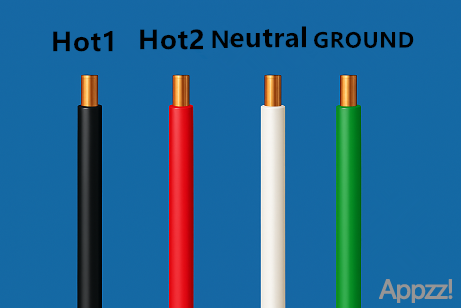
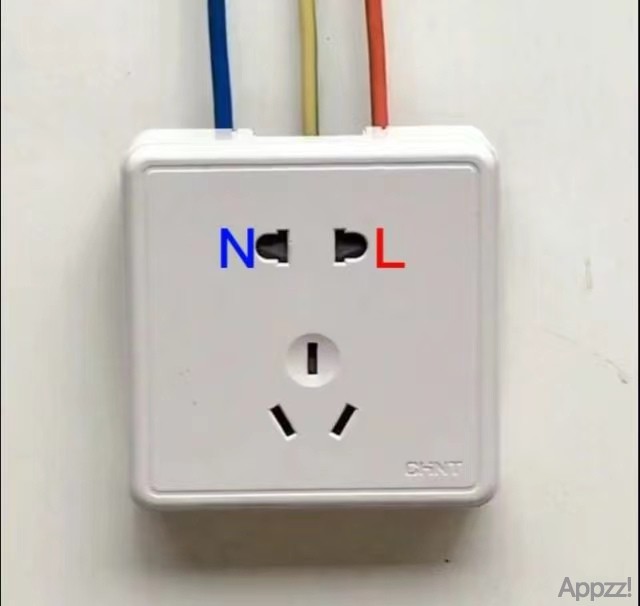
In daily life, our household appliances and lighting devices all rely on residential electrical wiring. Understanding the neutral wire, live (hot) wire, and ground (earth) wire not only helps ensure electrical safety, but also allows us to perform basic troubleshooting when faults occur. This article will (will introduce in detail) the definitions and functions of the neutral, live, and ground wires, as well as how to measure them using a multimeter and a voltage tester. What are the neutral wire, live wire, and ground wire? Different countries use different standards. United States and Canada homes use a split-phase system: two hot conductors (180° out of phase), a neutral conductor, and a protective ground. Hot 1 ↔ N = 120V Hot 2 ↔ N = 120V Hot 1 ↔ Hot 2 = 240V Ground / Equipment Ground In most 230V single-phase systems (Europe, India, China), the standard wire colors are:
Brown for Live (L), Blue for Neutral (N), and Green/Yellow for Protective Earth (PE). Neutral wire (N):
The neutral wire is a conductor drawn from the neutral point of the transformer and is directly connected to earth, so its potential is approximately zero. Its main function is to complete the circuit loop and ensure current can flow normally. Live wire (L):
The live wire is an energized conductor that has a voltage difference relative to the neutral wire. In China and many regions, the standard household voltage is 220 V. Its main role is to supply electrical energy to appliances. Ground wire (PE): Protective Earthing Conductor
The ground wire is a protective conductor directly connected to earth, usually bonded to the metal enclosure of electrical equipment. When leakage occurs, it diverts the leakage current into the ground, protecting personal safety. Under normal conditions it carries no current, but it functions during faults or leakage.
A household electrical circuit usually consists of an electricity meter, distribution box, switches, sockets, and electrical appliances.
The meter records power consumption, while the distribution box contains circuit breakers and residual current (leakage) protectors to ensure circuit safety.
The wiring is divided into live wire (L), neutral wire (N), and ground wire (PE), which supply power to appliances through switches and sockets.
How to Identify Neutral, Live, and Ground WiresIn practice, different conductors can be identified by color and testing tools. Color IdentificationLive wire (L): usually red, brown, or yellow Neutral wire (N): usually blue Ground wire (PE): yellow-green striped
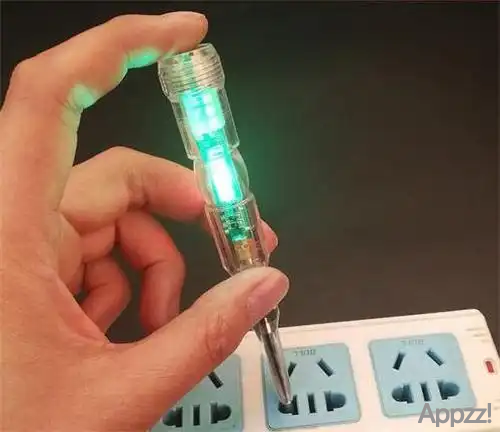
Using a Test PenA test pen is a simple tool used to determine whether a wire is energized. Touch the metal tip of the test pen to the wire while pressing the tail end with your finger:
Using a MultimeterMeasure voltage between live and neutral:
Set the multimeter to AC voltage (AC 250V or higher).
Red probe → live wire
Black probe → neutral wire
Normal reading ≈ 220 V Measure voltage between live and ground:
Red probe → live wire
Black probe → ground wire
Normal reading ≈ 220 V Measure voltage between neutral and ground:
Red probe → neutral wire
Black probe → ground wire
Normal reading ≈ 0 V
Safety PrecautionsEnsure SafetyDisconnect appliances before measurement Keep hands dry Avoid direct contact with conductors Pay attention to insulation when using tools
Tool SelectionAbnormal Conditions
Function SummaryNeutral wire: completes the circuit loop Live wire: supplies electrical energy Ground wire: protects people from electric shock
How to Troubleshoot Household Electrical ProblemsUse a test pen Use a multimeter Check wiring
ConclusionNeutral, live, and ground wires are essential parts of household wiring. Correct identification and usage are key to electrical safety.
With a test pen and multimeter, you can quickly judge circuit conditions and detect problems in time.
Always follow safety procedures to protect yourself and your home.
|  English
 简体中文
简体中文 繁體中文
繁體中文 한국 사람
한국 사람 日本語
日本語 Deutsch
 русский
 بالعربية
 TÜRKÇE
 português
 คนไทย
คนไทย french