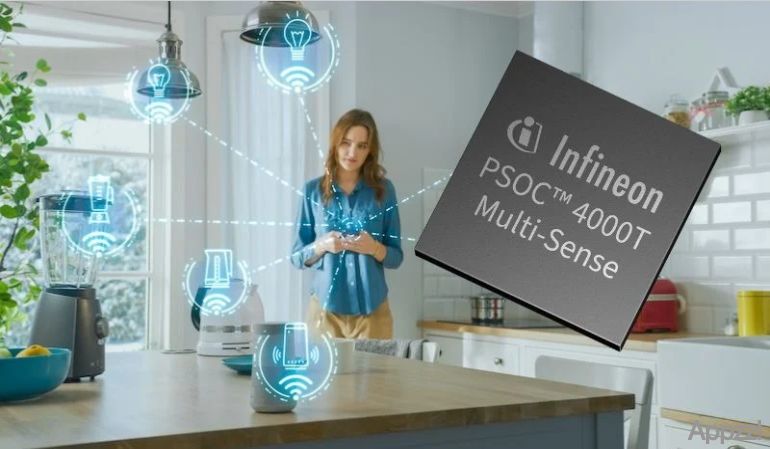
Figure 1: PSoC 4000T and PSoC 4100T Plus will support floating touch sensing based on CapSense™ and Multi-Sense technologyHover (floating) touch sensing is not a new concept in the technology industry.
In consumer electronics — especially smartphones — this feature has already been widely used by brands such as Huawei and many other manufacturers. Recently, microcontrollers manufactured by Infineon integrate hover touch sensing capability.
The principle itself is not complex, but in practical applications it has both advantages and disadvantages.
(1) Disadvantages1. False triggering
The biggest drawback of hover touch sensing is unintended activation.
Since there is no physical button feedback, it may cause irreversible operations during precise control scenarios, potentially leading to safety risks or property damage. 2. Accuracy and resolution
Hover touch technology still has limitations in high-precision and high-density sensing applications and requires further optimization and algorithm improvement.
(2) AdvantagesThe advantage of hover touch sensing lies in reducing the product BOM (Bill of Materials) by eliminating mechanical buttons, thereby lowering manufacturing cost. It may be suitable for limited use in medium-size and large industrial equipment.
However, changing user interaction habits requires significant market adoption and iterative product improvements.
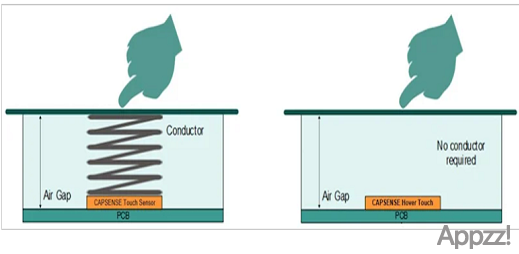
Figure X. Principle of Hover Touch sensing
| 
 English
 简体中文
简体中文 繁體中文
繁體中文 한국 사람
한국 사람 日本語
日本語 Deutsch
 русский
 بالعربية
 TÜRKÇE
 português
 คนไทย
คนไทย french