|
A surge protective device (SPD), also called a lightning protector, is an essential protection device in electrical installations.
Below explains how to correctly install it in a distribution box or cabinet.
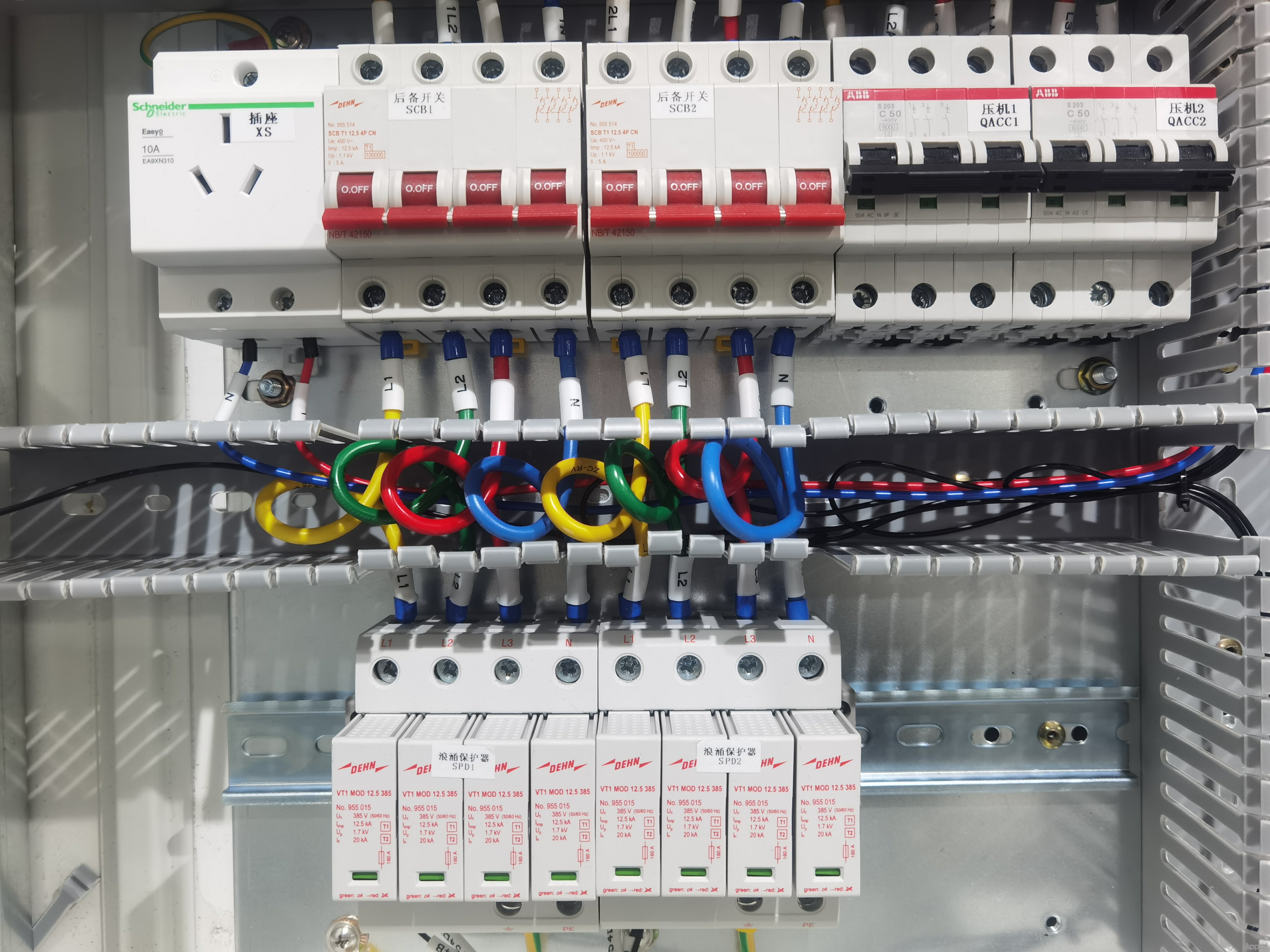
Installation PositionThe SPD should be installed at the power supply incoming point.
It is typically mounted next to the fuse or circuit breaker so incoming surges can be discharged to ground before entering the internal circuit.
Basic Wiring PrincipleThe SPD must be connected in parallel, not in series with the load. Typical single-phase connectionL (live) → SPD terminal L N (neutral) → SPD terminal N PE (earth) → SPD grounding terminal
Three-phase connectionEach phase must be protected:
Important Installation Rules
PurposeThe SPD quickly diverts lightning or switching overvoltage to ground, preventing damage to electrical equipment. Key idea:
The surge must be discharged to earth before it reaches the load. | 
 English
 简体中文
简体中文 繁體中文
繁體中文 한국 사람
한국 사람 日本語
日本語 Deutsch
 русский
 بالعربية
 TÜRKÇE
 português
 คนไทย
คนไทย french