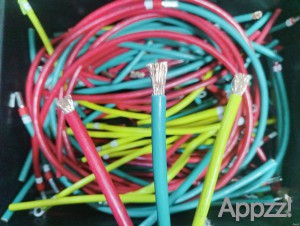
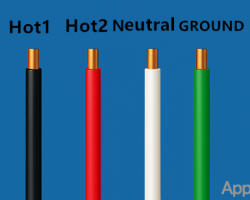
In daily electrical work, these two types of copper conductors are used very frequently. Below are the key differences between them, which are very important in practical use.
(1) Differences in Application1. Solid copper wire
After its routing shape is fixed, it is not easy to bend repeatedly.
Therefore, it is commonly used for short-distance connections inside control boxes and control cabinets as fixed wiring conductors.
2. Stranded copper wire
Because it bends easily and can be shaped conveniently, it is often used in movable electrical machinery and in complex wiring inside control panels and cabinets.
(2) Differences in Electrical Current TransmissionSolid copper wireSince it consists of a single conductor, the current path is more direct and stable.
It is suitable for long-distance and high-stability transmission. The resistance to current is relatively small, so it performs efficiently in long-distance transmission, especially in low-frequency applications where signal attenuation is minimal.
However, in high-speed or high-frequency signal transmission, due to the skin effect (high-frequency signals tend to travel along the conductor surface), its transmission efficiency may be lower than stranded wire, because the signal concentrates on one conductor surface, increasing attenuation.
Stranded copper wireIts structure allows signals to pass through multiple contact paths between strands, providing better performance in high-frequency transmission.
The distribution of many strands reduces the influence of the skin effect, so in high-speed electronic signals or high-frequency applications, stranded copper wire is usually more suitable.
In addition, its flexibility enables more precise cable routing, especially where frequent bending and movement are required. Although it may slightly increase impedance at low frequency, it performs better in high-frequency and dynamic applications.

 English
 简体中文
简体中文 繁體中文
繁體中文 한국 사람
한국 사람 日本語
日本語 Deutsch
 русский
 بالعربية
 TÜRKÇE
 português
 คนไทย
คนไทย french